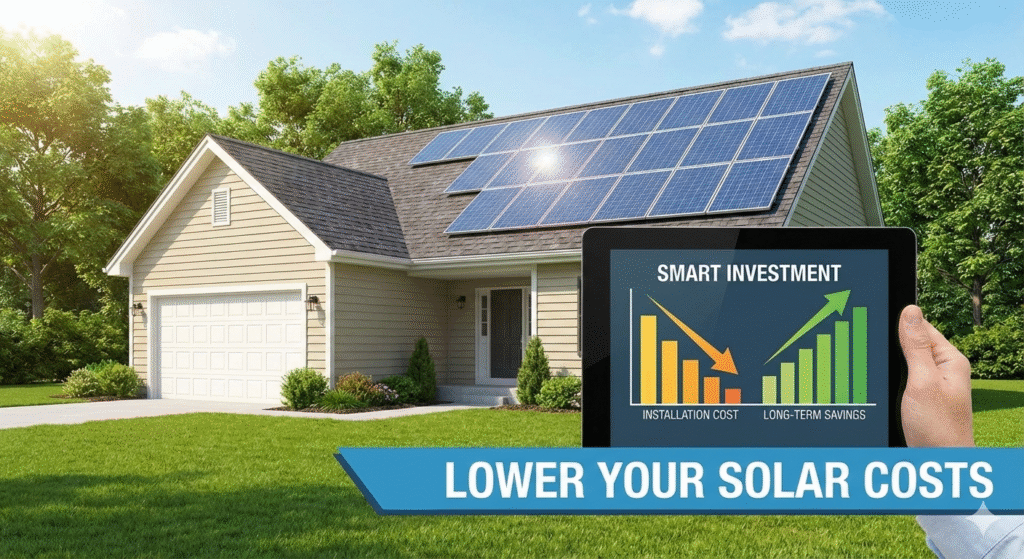
The Rocky Mountains are a hub for adventure, innovation, and, now, living a sustainable life. For homeowners in Colorado, living a renewable life means more than making a green choice—it’s a significant financial move. To make a real impact on energy independence and home value in Colorado, you have to first know what your Colorado Solar Panel Installation Costs really are. This is far from a simple inquiry, involving far more factors than a price tag, from Colorado Rebates to Federal Tax Credits, from product durability to the Colorado Climate.
In this complete resource, we are going to identify five different cost factors that can make a dramatic impact on your wallet, teaching you how to cut costs by as much as $10,000 in 2025.
The Essential Breakdown of Colorado Solar Panel Installation Cost Factors
The moment you request a quote, you’re presented with a daunting figure, but that figure is comprised of several key components, each of which is negotiable and highly variable based on your location—whether you’re near the Denver Metro area, the quiet plains, or high up in the mountains. To gain a competitive edge in negotiating and planning your solar switch, you must look beyond the simple price per watt.
Equipment Quality: Panels, Inverters, and the Mountain Climate
The hardware is the very foundation of any solar investment. The quality of your panels, either Tier 1 or Tier 2, along with the type of inverter used, be it string or microinverter, contributes monumentally to the overall Colorado Solar Panel Installation Cost. Durability is a key factor in Colorado, where hailstorms and heavy snow loads are part of the seasonal realities. While cheaper panels might look to save you a few bucks on the upfront payment, they could degrade faster or fail to hold up to the elements, which will cost more in the long term.
Tier 1 Panels: Greater efficiency, longer warranty (often 25+ years), and improved performance in low light (absolutely necessary for Colorado’s winters). It’s more expensive upfront but has a significantly improved ROI.
Microinverters: Microinverters are used for optimizing the energy generated on a per panel unit. For instance, even when a part of the energy is obstructed by a snow bank or a pine tree, the energy generated from the remaining panels is still at full capacity, which is highly essential for houses located in the Front Range area that are generally
The Hidden Costs of Installation Labor in the High Country
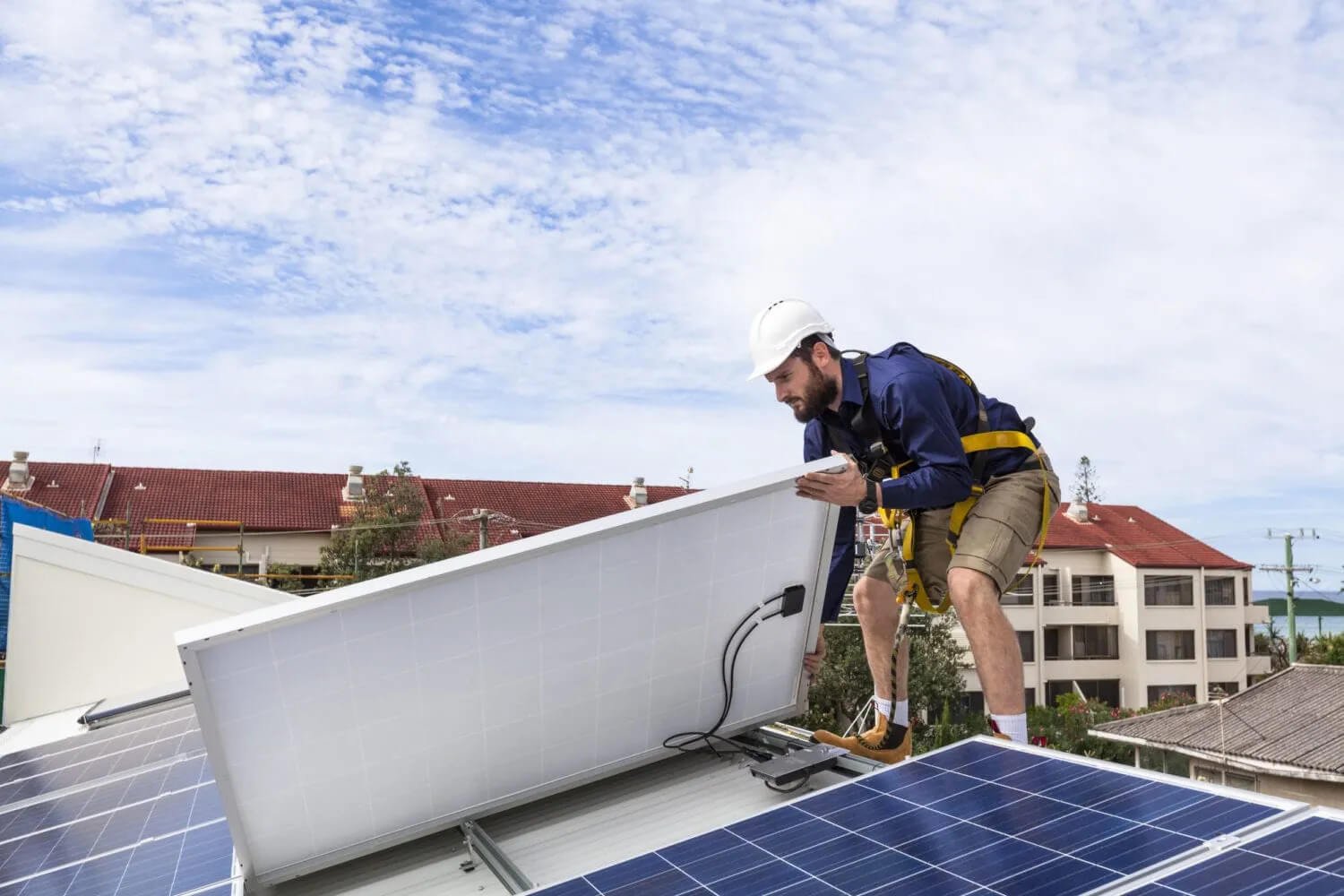
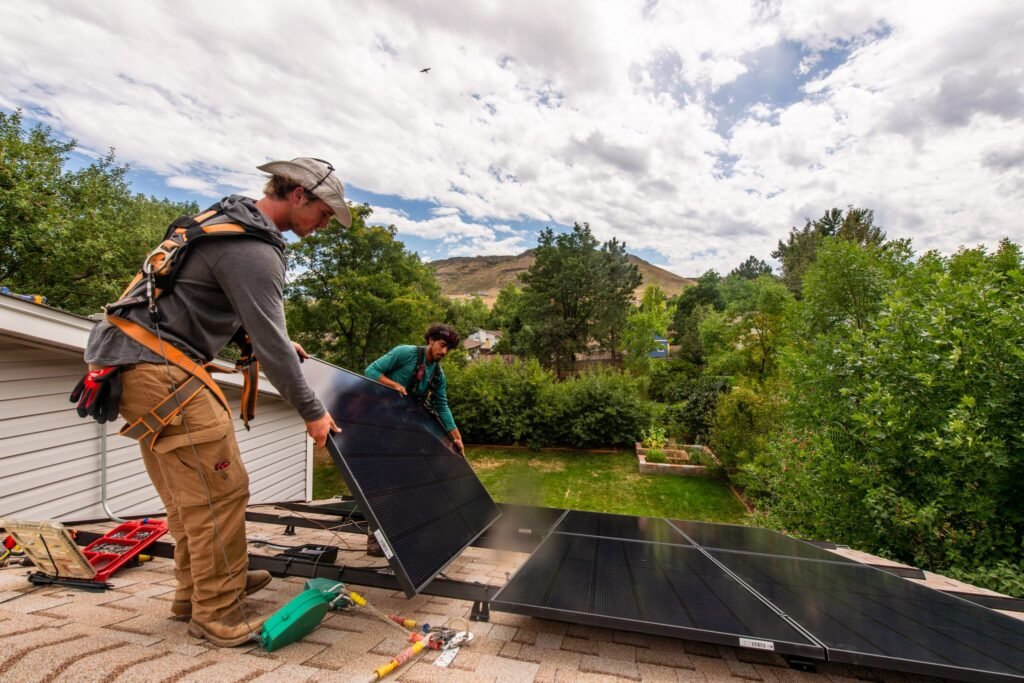
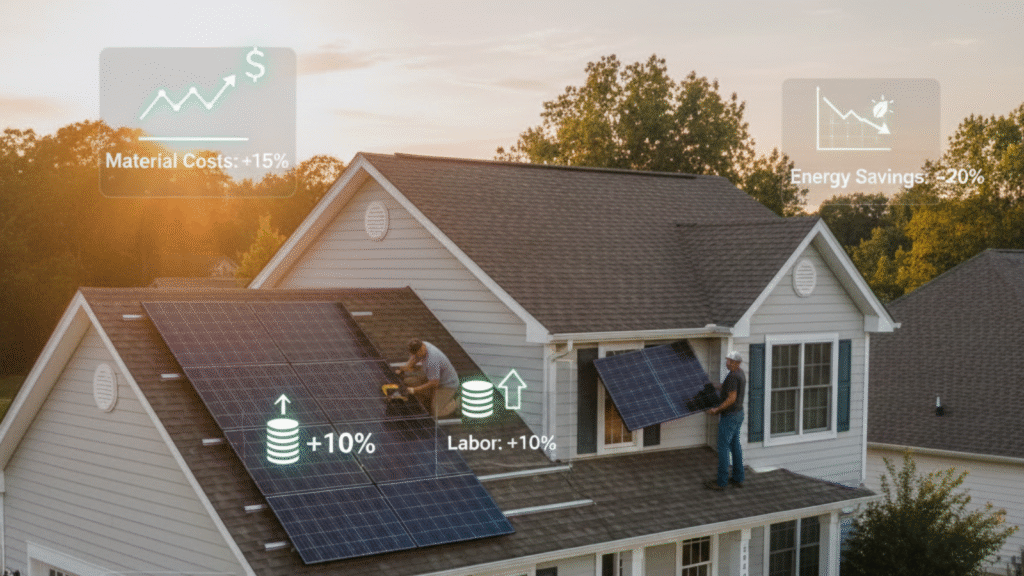
Labor costs are typically higher in Colorado than the national average, primarily due to prevailing wages and the specialized nature of rooftop work at high altitudes. A complex roof pitch, multiple angles, or a requirement for additional structural reinforcement (especially for older Victorian homes or heavy shake roofs) will drive up your Colorado Solar Panel Installation Cost. This cost is non-negotiable but can be managed by ensuring you work with established best solar companies Colorado that have efficient processes and certified, local crews.
Permitting, Inspections, and the Bureaucratic Burden
Everything from Fort Collins down to Colorado Springs has its different permitting process, which can influence the Colorado Solar Panel Installation Cost. In addition, the local requirements and required electrical inspections—admittedly mandated in many cases by Xcel Energy or Black Hills Energyadd administrative fees and time to the project, further impacting the Colorado Solar Panel Installation Cost. These are relatively minor line items; however, they nevertheless contribute to the overall project expense and timeline.
Navigating Colorado-Specific Solar Incentives and Rebates
One of the largest factors in reducing your effective Colorado Solar Panel Installation Cost is leveraging state and local incentives. Failing to apply for a single rebate could cost you thousands. This is where smart planning truly pays off, transforming a high initial investment into a highly profitable long-term asset.
The Federal Solar Investment Tax Credit (ITC)
While technically not a state-specific incentive, the Federal ITC is the holy grail of efficiency for solar investments. This allows you to claim a significant percentage of your total system cost as a tax credit. This credit has been extended, making 2025 the optimal time to invest.
Crucial Tip: Always consult a tax professional to ensure you qualify for the full amount. For official guidelines and the current percentage, refer to the IRS website (an essential external Dofollow link for your financial planning). For a breakdown of current tax year details, check the official energy.gov page for the most accurate information.
Local Utility Rebates and Net Metering Policies
The majority of savings in the Denver Metro area come directly from utility providers, primarily Xcel Energy. Their solar incentives Denver programs and performance-based incentives (PBI) can offer substantial upfront cash back or credits for the energy your system produces. Furthermore, Colorado’s robust Net Metering policy ensures you receive credits on your bill for any excess energy you send back to the grid. This policy fundamentally alters the Colorado Solar Panel Installation Cost by creating a direct pathway to offsetting 100% of your energy usage.
Colorado’s Property Tax Exemption for Residential Solar Power CO
In addition to direct cost reductions, Colorado offers a massive indirect benefit: solar systems are exempt from property tax assessment. This means installing solar increases your home’s market value without increasing your yearly property tax burden—a significant long-term financial advantage that enhances the ROI solar panels Colorado equation.

Calculating True ROI: Beyond the Initial Colorado Solar Panel Installation Cost
One thing homeowners shouldn’t focus on is simply the payback. The key to a successful project is Return on Investment, which takes into consideration avoided utility bills, incentives, and enhanced value.
For a typical 7kW system in Colorado, a Colorado Solar Panel Installation Cost of approximately $25,000 to $30,000 may be incurred for a system size necessary for most three- to four-bedroom residences. However, with the application of the Federal ITC incentive credit and utility rebates, the Colorado Solar Panel Installation Cost can fall in the range of $17,000 to $22,000. At current electricity prices in Colorado, this system will pay for itself in 7 to 9 years based on reduced electricity expenditures. Following the payoff period, electricity usage will cost nothing for a lifetime of 25 years or more.
The Impact of Battery Storage on Cost and Efficiency
While adding a solar battery (like a Tesla Powerwall or Generac) significantly increases the upfront Colorado Solar Panel Installation Cost, it maximizes your energy independence and provides backup power during unexpected outages. The ability to store your own clean energy rather than selling it back cheaply to the grid during peak production times dramatically improves your efficiency and can be crucial for homes susceptible to mountain weather disruptions.
Analyzing Your Energy Profile with Expert Residential Solar Power CO Partners
Before any installation, a professional energy audit should be mandatory. Your chosen partner should analyze seasonal usage patterns, shade profiles, and the ideal tilt and azimuth for your panels to maximize production, especially given Colorado’s unique solar exposure. This expert analysis ensures the system is right-sized and prevents you from overpaying for unnecessary capacity—a key strategy to reduce the overall Colorado Solar Panel Installation Cost.
The Role of Solar Financing Options in Managing Cash Flow
For many homeowners, the upfront investment is the biggest hurdle. Fortunately, the market is saturated with favorable solar financing options designed specifically for residential renewable projects, enabling you to start saving immediately without draining your reserves.
Loans vs. Leases: Choosing the Best Path to Ownership
- Solar Loans (Recommended): These function like a home equity loan, allowing you to own the system outright. By owning, you qualify for the Federal ITC and all local rebates, which you can use to pay down the principal immediately. This is the optimal path to maximizing the ROI of your Colorado Solar Panel Installation Cost.
- Solar Leases/PPAs: A third-party company owns the system, and you pay a fixed monthly rate for the power it generates (PPA) or a flat lease fee. While zero-down, you sacrifice all tax credits and rebates, making your long-term savings significantly lower.
Finding Competitive Rates for Solar Financing Options
Shop around! Many credit unions and local banks in Colorado offer specialized green energy loans with exceptionally low interest rates (often below 5%) because these systems are proven to add value to the property. Comparing these local offers to national solar financing companies can easily save you thousands in interest over the life of the loan.
Vetting Best Solar Companies Colorado: A Buyer’s Guide
Your installer is the single most important variable in your solar journey. A poorly installed system can negate the benefit of high-quality equipment, leading to roof leaks, voided warranties, and subpar performance.
While choosing among the top solar providers in Colorado, keep these three important elements in mind:
- Local Experience: Have they worked extensively with Xcel Energy Net Metering? Do they have familiarity with the city of Denver permitting requirements? Do they have familiarity with snow mitigation systems in mountain homes?
- Certifications: Make sure they have the required certifications and are accredited by the North American Board of Certified Energy Practitioners (NABCEP).
- Warranty & Service: A good warranty will include all three aspects of production: parts, labor, and production. A service installer with a 25-year service warranty demonstrates commitment to their work.
“We would always recommend beginning your research by comparing local providers’ reviews, making sure they are in line with your project’s scope,” advises our source. To get more in-depth reviews and consumer feedback on different panels and financing companies, it is advised to look into a non-profit industry-specific online community where you can gain insight into real-world experiences before deciding which company to go with (Nofollow, non-endorsed opinions: <a href=”https://www.solarcriticforum.org/reviews” rel=”nofollow”>Solar Industry Review Forums</a>). For a deeper dive into our team’s approach and commitment to transparent pricing, you can visit our internal resource page on Choosing a Reliable Installer in Colorado.
Frequently Asked Questions (FAQ)
To address common inquiries and ensure we cover all intent-based questions, here is a manual FAQ section, structured for clarity and incorporating the focus keyword naturally.
Q: What is the average Colorado Solar Panel Installation Cost for a standard home before incentives?
A: Prior to incentives, the Gross of a Colorado Solar Panel Installation Cost will be in a range of $3.50 to $4.50 per watt. Based on a common 7kW system, this will cost $24,500 to $31,500 before incentives. A key point here is to realize you’ll want to base your calculation of your Federal ITC tax credit on this Gross Cost.
Q: How much does snow affect my solar production in the Front Range?
A: With snow being a common occurrence, the overall effect is usually minimal and has little impact on the Colorado Solar Panel Installation Cost. The frequent sunshine and cold temperatures of Colorado allow snow to slide off the panels quickly, mainly those installed with a minimum 30-degree tilt, helping protect the Colorado Solar Panel Installation Cost from long-term efficiency losses. This, however, has to be done by local residential solar power CO experts who can plan the whole work for high-efficiency inverters when production loss has to be mitigated during extended storms.
Q: Do I need a battery, and how does it change the Colorado Solar Panel Installation Cost?
A: A battery is highly recommended to maximize ROI solar panels Colorado and achieve true energy independence, but it is not required. Adding a standard home battery can add an additional $10,000 to $18,000 to the overall cost, depending on the capacity of it. However, some utility providers offer additional incentives for storage batteries that help offset some of that expense.
Q: Can I use solar financing options to cover both the panels and the battery?
A: Yes. Most dedicated solar financing options allow you to roll the total cost of the solar panels, battery backup, and installation into a single, low-interest green energy loan. This allows you to manage the entire Colorado Solar Panel Installation Cost over time while immediately benefiting from the energy savings and the Federal Tax Credit.
Final Verdict: Smart Investment Lowers the Colorado Solar Panel Installation Cost
Mastering the transition to a life of solar power can be a painstaking research project, especially when considering financial factors which are specific to a state such as Colorado. From using hail-resistant solar panels to utilizing Colorado’s very generous solar incentives, every step you take will affect your Colorado Solar Panel Installation Cost in a direct manner. By being thorough in selecting quality materials, taking full advantage of both state and federal tax incentives, such as the ITC, and engaging a reputable contractor among Colorado’s leading companies in the solar industry, you can be sure you’ll make a sound investment and a very profitable one.
Do not be turned off by the up-front cost. When considered in terms of incentives and future savings in avoided energy expenses, a solar investment is among the most prudent financial moves a homeowner in Colorado can make in 2025. Make a commitment to yourself today: invest in your own energy independence and enhance your mountain residence’s value.