We take mountain safety seriously here in Colorado, where we check the avalanche forecast, strap on the snow chains, and pack emergency gear when we head into the high country. Have you given the same attention to a silent, invisible threat lurking inside your four walls? I’m talking about carbon monoxide—or, as it’s often called, “the silent killer.”
If your Denver, Boulder, or Front Range home is heated with a furnace, features a gas stove, has a fireplace, or even has an attached garage—which is most of us!—then a properly functioning Colorado Carbon Monoxide Alarm isn’t just a smart idea, it’s a legal requirement and an absolute necessity for your family’s protection.
Let’s face it, home safety regulations and appliance maintenance are just about as far from fun as you can get. In the case of CO, however, a little effort today makes all the difference between peace of mind and possible disaster. We’re going to break down exactly what you need to know—from the core facts about the gas itself to the specific Colorado laws that protect you to a simple maintenance plan.
Understanding the Invisible Danger
But what is carbon monoxide, exactly?
Colorless, odorless and tasteless, it’s a gas that’s produced anytime you burn fuel. Think natural gas, wood, propane, charcoal or kerosene. When appliances are operating properly, this CO is vented harmlessly outside.
Trouble starts when one thing goes wrong: a blocked chimney, a cracked furnace heat exchanger, a portable generator running too close to the house, even just leaving your car running in the garage. In an instant, dangerous levels of CO are circulating inside.
Why is it so dangerous?
When you inhale CO, it latches onto the red blood cells that otherwise carry oxygen throughout your body. It hijacks—essentially—that oxygen-carrying mechanism, starving your brain and organs. You just fall asleep and never wake up. That’s why your Colorado Carbon Monoxide Alarm is your only protection.
The Colorado Law: Your Carbon Monoxide Alarm Obligation
Colorado takes its laws on CO detection seriously, and for good reason—the laws were inspired by the tragic 2008 deaths of the Lofgren and Johnson families due to CO poisoning in Aspen. The resulting legislation, Colorado House Bill 1091—The Lofgren and Johnson Families Carbon Monoxide Safety Act—established clear mandates for homeowners and renters across the state.
Who Must Install a Colorado Carbon Monoxide Alarm?
If your single-family or multifamily dwelling contains any of the following, the law applies to you:
- A fuel-fired heater or appliance: furnace, water heater, gas stove, etc.
- A fireplace: either gas or wood-burning
- An attached garage.
This includes most of the houses in Colorado.
Where Does the Law Require Placement?
A functional CO alarm must be installed within 15 feet of the entrance to each room lawfully used for sleeping purposes.
The Sale & Transfer Mandate
Crucially for buyers and sellers: any home meeting the above criteria, before it’s sold or transferred, must have an operable Colorado Carbon Monoxide Alarm installed in a manner consistent with the placement requirements. If you’re buying a home or completing a major remodel in Colorado, this is a requirement your Realtor® and title company will be paying attention to.
Renter Responsibilities
State law requires landlords to provide and install a working carbon monoxide alarm upon a change in occupancy. The owner is responsible for the initial installation and replacement if reported defective, while the tenant is responsible for general maintenance, such as changing batteries and reporting defects.
This is not a recommendation; this is an absolute requirement for owning or renting property within our state.

The Strategic Placement of Your CO Alarm
Where the law sets the minimum, safety experts recommend going even further. Think of your Colorado Carbon Monoxide Alarm as an early warning system—the more coverage, the better your defense.
Placement Checklist for Comprehensive Safety:
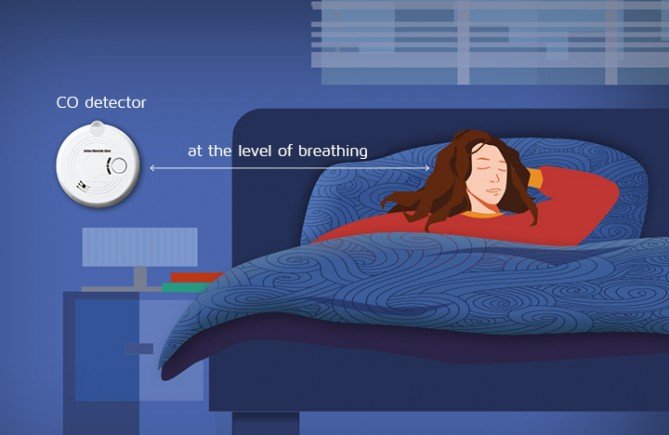
- Outside All Bedrooms: There is absolutely no compromise on this. Mount the detector in a hall or common area within 15 feet of all bedrooms.
- At Each Level: Put one on each level, plus the basement. CO mixes with the air, and you want sensors where it may accumulate.
- Near the Furnace/Water Heater: Because of the initial startup fumes, you will need to keep it about 15 feet away from fuel-burning appliances, since it usually causes nuisance alarms. Having one in the utility room or space next to it, like a basement near the furnace, is a smart thing.
- Near the Attached Garage: Put a detector near the doorway between the garage and living space since running a vehicle—even for a short time—can quickly spread CO into the house.
What Type of Detector is Best?
Buy only a quality Colorado Carbon Monoxide Alarm: Purchase detectors that have been tested and certified by a recognized independent testing laboratory, such as the UL symbol – Underwriters Laboratories. This will provide confidence that the device meets established standards of safety.
- Battery-powered: Most flexible placement but requires regular replacement of batteries.
- Plug-in with battery backup: These plug into an outlet and provide continuous power and backup in case of an outage.
- Hard-Wired & Interconnected: Required for new construction/major renovations. When one alarm goes off, they all sound. Highly recommended for larger homes.
Simple Maintenance: The 5-Minute Lifesaver
An inoperable detector is no detector at all. The secret to making sure your CO alarm is always ready, should it be needed, lies in developing a rapid, routine maintenance habit.
Your Easy CO Detector Maintenance Schedule:
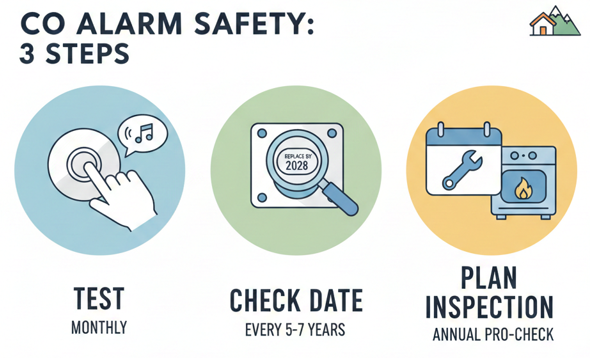
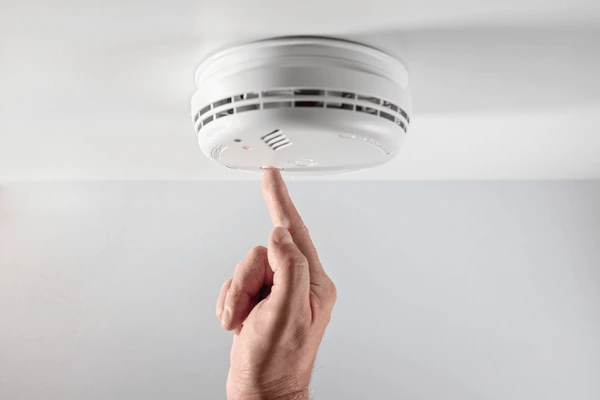
- Test Monthly: Every month, press the test button on each unit. It should be loud enough to wake you up.
- Change Batteries Twice a Year: Change batteries when you change your clocks for Daylight Saving Time – though Colorado doesn’t always seem to embrace that concept consistently, it is a good calendar reminder! At that time, change batteries in your smoke detectors. If the detector starts to chirp every 30-60 seconds, that means the battery is low and you need to replace it immediately.
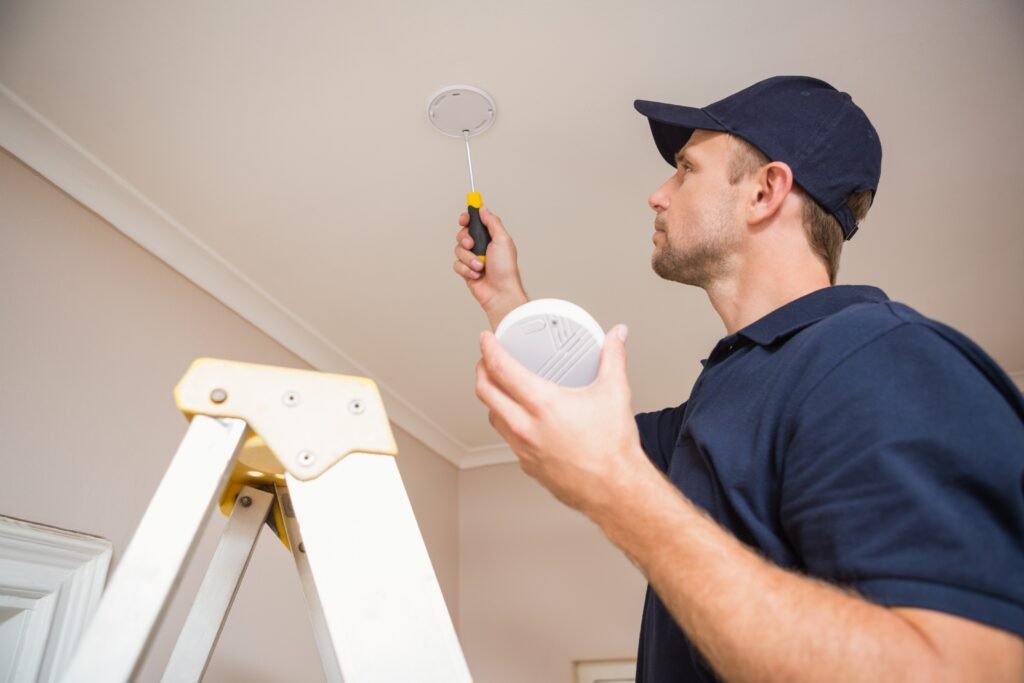
- Check the Expiration Date: The 5-7 Year Rule: This is the one people forget. The chemical sensors inside of a Colorado Carbon Monoxide Alarm deteriorate over time—most last about 5 to 7 years, check the label; some newer ones are 10 year models. Find the “Replace By” or manufacture date stamped on the back of the detector. When the time is up it’s time for replacing the whole unit—even if it looks just fine and even if the battery is new.
The Flu Impostor: Recognizing and Responding to CO Poisoning
Carbon monoxide has the reputation of a “silent killer” because it is totally nondetectable through any human senses: it is colorless, odorless, and tasteless. But what makes CO poisoning really insidious is that its early symptoms resemble a common illness so much that it is easily brushed aside until it is too late.
Symptoms and the Crucial Distinction
The first symptoms to appear when one is exposed to small quantities of CO are those of flu-like nature, like mild headache, dizziness, fatigue, nausea, and general confusion. This misdiagnosis could be lethal. The key diagnostic difference though, is that CO poisoning seldom involves a fever or body aches. If you or your family are experiencing symptoms—especially during winter months when heating systems are running—do not wait. The presence of a working Colorado Carbon Monoxide Alarm is your only way to confirm or rule out this threat.
Immediate Indicators of CO Exposure:
- Environmental Relief: A defining sign is that symptoms often rapidly improve or vanish entirely when the affected person leaves the home and moves into fresh air, only to return upon re-entry.
- Universal Illness: CO poisoning simultaneously afflicts anyone breathing the contaminated air. If numerous members of the family, especially children, and even indoor pets—who are often affected first—become lethargic, weak, or ill simultaneously, this is a major warning sign.

IMMEDIATE ACTION: When Your Colorado Carbon Monoxide Alarm Sounds
If your Colorado Carbon Monoxide Alarm goes off—or you strongly suspect CO poisoning based on symptoms—you must take immediate, decisive action.
- Evacuate Immediately: Move all occupants of the building including children, the elderly and pets out of the building and into the fresh open air immediately without stopping to find the source. Do not delay evacuation to gather belongings.
- Call Emergency Services: Once safely outside, use a mobile phone to call 911 or your local Fire Department. Inform them that your Colorado Carbon Monoxide Alarm is sounding, or that you have symptoms of CO poisoning. This is considered a medical and fire emergency.
- Safety First: The homeowner should under no circumstance re-enter the home until emergency personnel have arrived, investigated the premises, and officially declared that levels of CO have been reduced to a safe minimum. Appliances also should not be restarted until the source of the leak has been professionally repaired.
Prevention is Protection: Maximizing the Value of Your Colorado Carbon Monoxide Alarm
But while the Colorado Carbon Monoxide Alarm is a lifesaving layer of protection, proactive prevention will always be the best protection strategy. Because Colorado is mainly a cold climate dependent upon fuel-burning heating systems, diligent maintenance can prevent gas from ever reaching dangerous levels.
Annual Inspections Are Non-Negotiable:
- Service Your Appliances Annually: Yearly service of all fuel-burning appliances by a qualified, licensed technician is a must. This includes, but is not limited to your furnace, gas water heater, stove and clothes dryer. The technician will search for small cracks in heat exchangers, deterioration or rust on vent piping – precursors to CO leaks that may cause your Colorado Carbon Monoxide Alarm to sound.
- Chimney and flue maintenance: Owners of fireplaces—such as gas and wood—and woodstoves may need to have annual inspections performed by a professional chimney sweep. One common cause of CO backing up into living areas is blockages—such as from nests or debris, or an accumulation of heavy creosote.
- External Vent Checks: One of the more common problems associated with snowstorms is blockage of an external exhaust pipe on either a high-efficiency furnace or water heater. The outdoor exhaust pipes for all fuel-burning appliances should always be totally clear of snow, ice, or other debris.
Critical Usage Habits to Prevent CO Accumulation:
- Vehicle Operation: Never run a car or truck inside an attached garage, even with the door open for a short time. CO can build up very fast this way and spread into your home. If you need to start the vehicle, immediately back it out.
- Outdoor Appliances: Do not use outdoor fuel-burning appliances indoors. These include but are not limited to (Charcoal grills, Propane camping stoves Kerosene heaters) Gasoline-powered generators. The majority of fatal CO poisonings occur because such appliances are used indoors in locations such as homes, garages, sheds, and even tents.
- Generator placement: If operating a portable generator during an outage, keep the unit at least 20 feet – 6 meters away from the home, and pointed so the exhaust is directed away from windows, doors and vents. A generator’s exhaust can overwhelm your Colorado Carbon Monoxide Alarm in minutes.
FAQ: Essential Questions About Your Colorado Carbon Monoxide Alarm
How does CO concentration affect vulnerable populations?
Children, the elderly, and anyone suffering from heart or respiratory problems—even pets—are likelier than others to fall victim to CO poisoning. They absorb the gas much quicker than a healthy adult because of either a smaller lung capacity and faster metabolism, or due to pre-existing conditions. Keeping your Colorado Carbon Monoxide Alarm maintained will be key if you have members of your family in those groups, and placement of sensors near their sleeping areas will be one of your top priorities.
Is a combo smoke/CO detector as good as individual units?
Combination units are available and are conveniently listed for both hazards, UL 2034 for CO and UL 217 for smoke. Most professionals will recommend separate units, though, because optimum placement criteria is different. Smoke detectors should be installed high on the ceiling—as smoke rises—and should not be near the kitchen, while Colorado Carbon Monoxide Alarm units should be near sleeping areas and 15 feet away from fuel sources. This allows separate units to be optimally placed for each particular risk.
Would the problem be resolved by opening a window when the alarm goes off?
No, opening a window can lower the concentration of CO temporarily, but by no means in such a kind of alarm situation can it provide any safe and adequate reaction. In case of an alarm, that would mean a dangerous, even life-threatening leak somewhere in your system requires professional intervention. The only safe course of action for you is to evacuate right away and call the emergency services. Opening a window is just a secondary measure one can do while quickly and safely leaving the home.
How do I distinguish between a CO alarm and a smoke alarm alert?
A working Colorado Carbon Monoxide Alarm would use some sort of distinctive life-saving signal, such as four rapid beeps, repeated, unlike the common pattern of a smoke detector which would usually be three longer beeps, or a continuous siren. If your unit is emitting just one short “chirp” every 30-60 seconds, that is its low-battery or end-of-life warning—meaning the entire unit needs attention or replacement—not necessarily a gas leak.

Taking Action Today: Secure Your Colorado Carbon Monoxide Alarm Defense
It’s small, but a very important device in ensuring your home and family stay safe. Here in Colorado, we rely on heating and fireplaces quite a bit, so proactive attention to your alarms is extremely necessary.
Take five minutes right now:
- Test: Press the test button on every Colorado Carbon Monoxide Alarm unit in your home.
- DATE CHECK: Check the back of each unit for a “Replace By” date or manufacture date. If it’s beyond its 5-7 year life span—or manufacturer recommendation—replace it today.
- Plan: Schedule your annual furnace inspection now.
The most proactive, meaningful step you can take this season to protect your family and ensure true peace of mind is ensuring your Colorado Carbon Monoxide Alarm is correctly installed, tested, and updated.